A quotation that says only “wire mesh trolley” leaves out the measurements, load conditions, castor arrangement, finish, accessories, and delivery responsibilities that determine whether the equipment will work in your stockroom. Use the specification checklist and route tests below to compare models, identify missing information, and request a location-specific quotation with fewer surprises.
Key takeaways
- Request the model number, mesh aperture, shelf count, and rated load.
- Measure doorways, aisles, ramps, lifts, and turning points before ordering.
- Choose castors and handles for floor surfaces, route length, and daily loads.
- Confirm included parts, delivery condition, warranty, and Jaipur support contacts.
Build a Complete Specification Sheet Before Comparing Models
A quotation that says only “wire mesh trolley” is not technically complete. Ask for the exact model number, because supreme mhe wire mesh trolley specifications in jaipur can differ in shelf count, mesh aperture, load rating, castors, finish, and handle design.
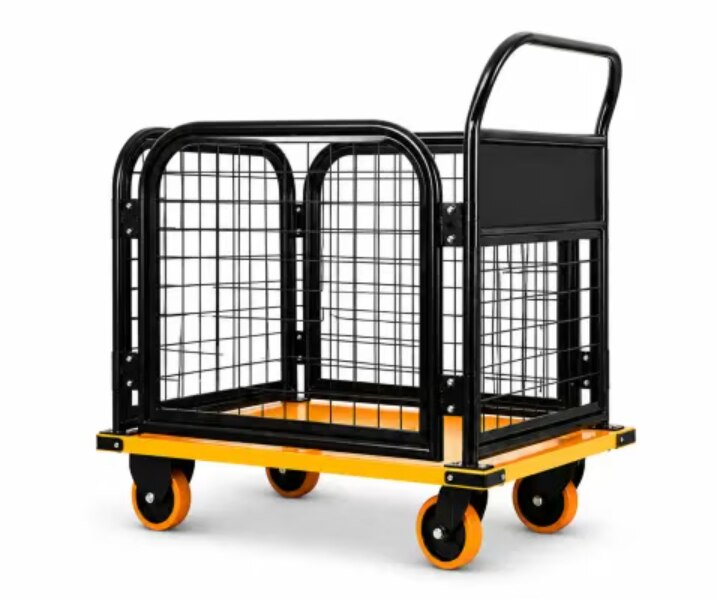
The supreme wire mesh trolley details must show both outside dimensions and usable internal space, including basket length, width, height, and volume.
| Specification | What the supplier must state | Why it matters |
|---|---|---|
| Dimensions | Overall length, width, height, usable shelf dimensions, shelf clear height, and turning clearance | A trolley can fit an aisle but fail at a doorway, rack, lift, or turn |
| Construction | Mild steel or stainless steel, wire diameter, frame-section thickness, mesh aperture, grid pattern, and welded or woven mesh | These determine rigidity, containment, corrosion resistance, and suitability for humid stockrooms |
| Capacity | Safe working load in kilograms, shelf-by-shelf capacity, and whether the rating covers evenly distributed or concentrated loads | One total rating can hide an overloaded shelf |
| Mobility | Castor diameter and material, swivel or fixed arrangement, brake type, handle height, and bumper details | Wheel layout affects control, floor protection, and stopping distance |
| Finish and supply | Powder coating or galvanising, trolley weight, assembly status, and warranty or replacement-parts terms | Finish affects service life, while knocked-down delivery changes setup responsibility |
Request the wire trolley equipment included as a line-by-line schedule:
- Frame and welded mesh shelves or basket
- Push handle, castors, brakes, and bumpers
- Fasteners, shelf dividers, and removable trays
- Assembly, unloading, castor fitting, inspection, freight, and GST stated separately
This sheet lets you compare like with like before price becomes the deciding factor.
Choose Dimensions, Capacity, and Mesh for the Actual Stockroom Route
Measure the complete route before choosing a mesh trolley for stockrooms. Record the narrowest aisle, doorway, fire exit, lift entrance, rack gap, turning point, threshold, ramp, and expansion joint. Compare each measurement with the fully assembled overall length, width, and height, including handles, bumpers, and castor plates—not just the shelf size.
Ask for these figures on the quotation:
- Usable platform length and width, shelf clear height, number of shelves, and usable internal volume.
- Safe working load in kilograms for the whole trolley and each shelf, stating whether the rating covers evenly distributed or concentrated loads.
- Mesh wire diameter, aperture size, grid pattern, frame thickness, and whether the mesh is welded or woven.
- Wheel diameter, width, material, and the number of swivel, fixed, and braked castors.
- Finish and material if the stockroom has humidity, wash-down areas, or corrosive goods.
| Route or load condition | Suitable comparison | Reject the option when |
|---|---|---|
| Tight aisles and frequent turns | Four swivel castors and a compact overall width | The handle or bumper catches racks or doors |
| Long straight aisles | Two fixed and two swivel castors for steadier tracking | The trolley wanders or needs excessive correction |
| Cartons stacked on shelves | Shelf-by-shelf capacity and mesh aperture smaller than the goods | Items protrude, fall through, or exceed one shelf’s rating |
| Thresholds, joints, ramps, or damaged concrete | Larger, wider wheels matched to the loaded weight | Small hard wheels create jolts or excessive point loads |
Calculate castor capacity from trolley weight plus goods, not goods alone. A wire mesh trolley in Jaipur that fits the aisle but fails at a lift threshold is the wrong specification. Choose the mesh trolley for stockrooms only after a loaded route trial.
Match Castors, Handle Design, and Operating Rules to Daily Movement
A four-swivel trolley turns tightly around rack ends, while two fixed and two swivel castors track more predictably along long aisles. Specify wheel diameter, width, material, swivel and fixed count, and braked castors; rate each castor against the trolley’s loaded weight, not the goods alone.
| Castor arrangement | Movement behaviour | Best fit |
|---|---|---|
| Four swivel castors | Tight turning and sideways repositioning | Short aisles, frequent direction changes |
| Two fixed, two swivel castors | Straighter tracking with controlled turns | Long aisles and repeated point-to-point travel |
| Braked swivel castors | Holds position during loading and picking | Slopes, lift entries, and busy work areas |
Check these details before accepting a mesh trolley for stockrooms:
- Use a push handle that stays rigid under the stated safe working load and leaves your hands clear of the frame; a flexing handle makes steering unpredictable.
- Compare fully assembled length, width, and height with the narrowest door, lift, fire exit, aisle, and turning point. A bumper, handle, or castor plate can defeat a suitable shelf size.
- Ask whether the load rating covers evenly distributed or concentrated loads, and request shelf-by-shelf limits when cartons sit on multiple levels.
- Inspect welded mesh intersections and frame joints for complete attachment, with no sharp wire ends in the loading area. Check that castor plates, brakes, and handle joints do not flex.
- Lock the brakes before loading, keep heavy items low, distribute weight across shelves, and never allow riding.
- Record damaged wheels, loose fasteners, bent mesh, failed brakes, and missing dividers during each pre-shift inspection.
Confirm What Is Included, How It Arrives, and Who Supports It in Jaipur
A quotation that says only “wire mesh trolley” is not technically complete. Ask for the exact model number and Supreme wire mesh trolley details, because shelf count, mesh aperture, castor arrangement, finish, and handle design can change between models.
1. Confirm the wire trolley equipment included line by line: frame, mesh shelves or basket, push handle, castors, brakes, bumpers, fasteners, shelf dividers, and removable trays. Do not assume castors or brakes shown in photographs are included.
2. Record whether the trolley arrives fully assembled, partly assembled, or knocked down. Confirm who fits the castors, shelves, handles, and brakes, and who performs the final inspection.
3. Separate delivery charges from the equipment price. Ask whether the quote includes freight to your Jaipur address, unloading, assembly, castor fitting, inspection, and GST. A lower knocked-down price can transfer labour and commissioning responsibility to you.
4. Put the model number, overall dimensions, usable shelf dimensions, trolley weight, and delivery condition on the purchase order. Usable shelf space can be smaller than the outside frame, especially around handles and bumpers.
5. Get warranty duration, exclusions, claim procedure, and response contact in writing. Ask which spare castors, brakes, mesh panels, fasteners, and handles are stocked, along with prices and expected dispatch time.
For Supreme MHE wire mesh trolley specifications in Jaipur, ask Supreme Material Handling Equipment to identify the exact quoted model rather than relying on a catalogue photograph. After-sales support should name the Jaipur contact, inspection process, and escalation route.
Related product
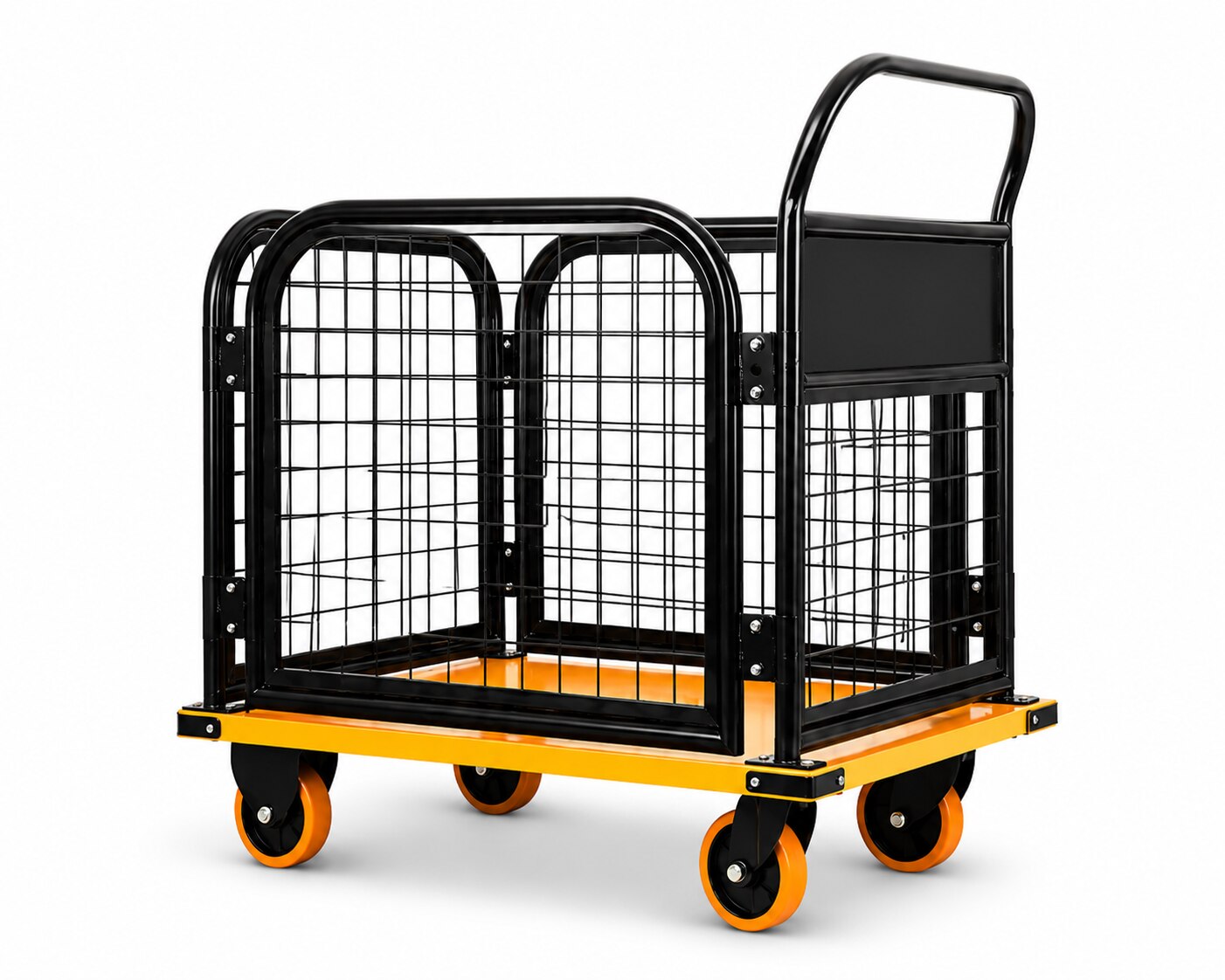 | Mesh Trolley Strong, Smart & Built for Efficient Material Handling The Supreme MHE Wire Mesh Trolley is a robust and versatile material-handling solution designed... View product → |
Compare the Mesh Trolley With the Equipment Your Task Really Requires
A wire mesh trolley in Jaipur is the right choice when you need visible, ventilated storage that moves cartons, tools, or packaged parts without trapping them in a solid box.
The mesh contains loose items while letting you inspect contents quickly; it is less suitable for tiny components that can fall through the aperture or for loads needing secure locking.
| Option | What the task requires | Choose it when |
|---|---|---|
| Wire mesh trolley | Open visibility, airflow, and moderate containment | You move mixed stock, tools, or cartons between shelves, workstations, and receiving areas |
| Platform trolley | One large, flat load with no shelves | You handle bulky cartons, drums, furniture, or irregular items |
| Tray trolley | Separate shallow levels for small items | You need organised trays for parts, documents, tools, or service supplies |
| Cage trolley | Enclosed, higher-security storage | Loads must remain contained during movement, or access must be restricted with a door, latch, or lock |
| Picking cart | Fast order assembly and item segregation | Staff collect many small stock lines and need bins, shelves, or a writing surface beside the route |
| Hand pallet truck | Pallets carried at floor level | You move palletised loads over short distances; it is the wrong choice for loose cartons or raised shelving |
For a mesh trolley for stockrooms, select shelf levels when visibility and ventilation matter more than security. Choose a cage trolley if falling items, unauthorised access, or narrow loose parts create the greater risk; choose a platform trolley when shelf frames would waste usable space.
Frequently asked questions
What should a complete wire mesh trolley specification sheet include?
Ask for the exact model number, dimensions, shelf count, mesh aperture, load rating, castor type, finish, handle design, included equipment, delivery condition, warranty, and support details.
How do you choose a mesh trolley for a stockroom route?
Measure doorways, aisles, ramps, lift entrances, turning points, and storage clearances. Match the trolley dimensions, rated load, shelf layout, mesh size, and castors to those conditions.
Which castors and handle features matter for daily trolley movement?
Compare wheel diameter, wheel material, swivel and fixed castors, brakes, bearing quality, handle height, grip, and manoeuvrability on your actual floor surface.
What should you confirm before buying a wire trolley in Jaipur?
Confirm what the quotation includes, how the trolley arrives, assembly requirements, delivery terms, warranty coverage, replacement parts, and the local support contact.
When is a mesh trolley the wrong equipment choice?
Choose another solution when you need powered movement, pallet-level loads, sealed containment, precise weighing, elevated lifting, or handling on unsuitable terrain.
Keywords