A hand pallet truck becomes hazardous when its forks, load, controls, route, or stopping area are treated as minor details. You will learn how to inspect and operate the truck, judge pallets and loads, manage Jaipur’s dust, heat, uneven floors, ramps, docks, and pedestrians, and select the correct model for your site.
Key takeaways
- Remove the truck from service when any control, wheel, fork, or hydraulic check fails.
- Keep the load balanced, centred, stable, and within the truck’s rated capacity.
- Walk slowly, keep clear visibility, and avoid sudden turns around pedestrians.
- Test the truck on your actual floors, ramps, dock plates, and thresholds before acceptance.
Inspect the Truck and Test Every Control Before Loading
Before each shift, park the hand pallet truck on level ground and inspect it before loading. Dust, heat, seasonal rain and uneven loading-yard surfaces in Jaipur can expose faults quickly, while mixed pedestrian traffic makes a control failure dangerous. Remove it from service if any check fails.
1. Read the nameplate. Confirm the rated capacity and specified load centre match the pallet; do not rely on a headline catalogue rating.
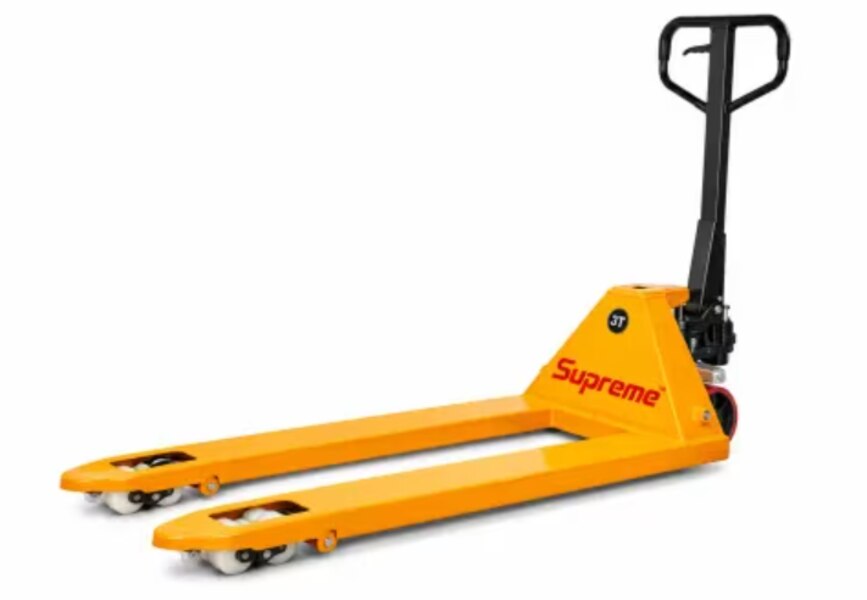
2. Examine both forks for bends, cracks, twisting, excessive wear and unequal height. Check that the fork length and width suit the pallets you will handle.
3. Inspect the steering handle, pivot points, control linkage, load wheels and steering wheels. Look for loose fasteners, flat spots, damaged tyres and debris around moving parts.
4. Look beneath the truck and around the hydraulic unit for oil leaks, damaged seals or bent components. A leaking truck is not ready for use.
5. Set the handle to neutral, raise and lower. Test each position without a load: raise should lift smoothly, neutral should hold the forks, and lower should descend under control.
6. Pump the handle several times, then check that the forks reach their working height and stay there. A truck that creeps down under load or cannot hold height must be tagged out.
7. Confirm the operator has site instruction and practical competence for this truck, route, dock and traffic plan. Record the inspection before use.
This basic hand pallet truck safety check takes minutes and prevents a failed wheel, control or hydraulic system from becoming a crushing incident.
Position the Forks and Lift a Stable, Balanced Pallet
A stable lift starts before the forks touch the pallet. Check the pallet for cracked boards, missing blocks, leaning cartons, loose strapping, and a load that extends beyond its base. Reject it or repalletise it if the pallet cannot support the load evenly.
- Clear people, loose packaging, oil, water, broken concrete, and other obstructions from the approach path.
- Lower the forks fully, then approach squarely with the steering tiller centred. Keep your feet away from the wheels, fork tips, and the space beneath the forks.
- Centre both forks with the pallet openings and confirm that the fork width suits the pallet. Do not enter at an angle.
- Insert the forks as far as the pallet allows without forcing them. Keep the tips from projecting through the far side, where they could strike another pallet, rack, or person.
- Pump the handle until the forks lift the pallet clear of the floor. Stop and check that both forks carry the load evenly and that cartons have not shifted.
- Confirm that the total weight and load centre stay within the actual nameplate ratings for your supreme hand pallet truck. A long load centre can overload the hydraulic system even when the weight is below the headline capacity.
- Set the handle to neutral before moving, and never allow anyone to ride on the forks, pallet, or frame.
Keep the load low and your feet clear while checking balance. If the pallet tilts, the load moves, or a fork contacts the pallet unevenly, lower it fully and correct the setup before travelling.
Move and Stop Safely on Jaipur Warehouse Floors
Keep the forks low—just clear of the floor—and travel at walking speed. Look in the direction of travel, keep both hands on the handle, and leave enough space to stop without striking a person, rack, wall, or pallet.
The practical answer to how to use hand pallet truck in Jaipur is to assess the route before every trip. Dust, loose packaging, oil, standing water, broken concrete, open drains, and abrupt floor changes can make the truck veer or stop suddenly. Block wet or damaged sections until they are cleaned or repaired.
1. Travel straight through clear aisles. Keep pedestrians separated from the load, stop at crossings, and sound the warning horn or call out before blind corners. Use a spotter when the load blocks your view; do not walk backward while pulling a heavy load unless you have checked the route and visibility demands it.
2. Turn slowly and widely. A sharp turn can shift a tall or off-centre load and catch a pallet on a rack or doorway.
3. Stop by releasing the drive force early, keeping your feet clear of the wheels and forks. Never rely on a sudden pull against the handle to halt on dust, water, or uneven concrete.
4. Stop on level ground before lowering. Move the lower control gradually, keep hands and feet outside the fork path, and confirm the pallet is stable after the forks leave it.
Afterward, clean dust from wheels and steering parts more frequently during Jaipur’s dry, hot months. Park with forks fully lowered, handle secured, and no obstruction of aisles, fire exits, dock edges, or emergency equipment.
Handle Ramps, Dock Plates, Thresholds, and Blind Corners
A slope is not a normal travel route for a hand pallet truck. Use one only when the truck manual and your site risk assessment permit it, the surface is dry and sound, and the load remains stable with its centre of gravity within the rated load centre.
Keep the load on the uphill side, move at walking speed, use a trained spotter, and never turn, park, or leave the truck unattended on the slope.
- Dock plate: Confirm the plate is secured against movement, rated for the combined truck and load weight, wide enough for both wheels, and free of oil, water, and broken edges. Cross its centre at walking speed; stop if the plate flexes, shifts, or leaves a gap.
- Threshold: Cross only a low, fixed, undamaged threshold that the wheels can clear without lifting the load or striking the frame. Use a properly rated bridge plate for a sharp step.
- Blind corner: Stop before the corner, look into the cross-traffic lane, and sound a warning. Keep pedestrians separated; use a spotter when the load blocks your view.
- Restricted route: Do not proceed through an aisle that is too narrow for the truck, load, and operator to pass without contact.
Dust, rain, loose packaging, broken concrete, and open drains increase risk during hand pallet truck operation in jaipur. Close the route or remove the hazard first; never rely on extra pulling force to overcome a sudden wheel stop.
Choose and Acceptance-Test the Right Truck for Your Site
Demand the exact model’s nameplate, manual, and measurable service terms before choosing a truck. The nameplate capacity and specified load centre override catalogue claims: a long load centre can overload the hydraulic system even when the pallet weighs less than the headline rating. A pallet truck supplier in Jaipur should provide:
- Rated capacity and load-centre definition
- Fork length, width, spacing, minimum and maximum height
- Turning radius and steering geometry
- Wheel material, diameter, and suitability for dust, wet floors, and uneven yards
- Stated operating-temperature limits, spare-parts availability, warranty exclusions, and local service response time
If Supreme Material Handling Equipment quotes a Supreme Hand Pallet Truck, match those figures against your pallet dimensions, aisle width, summer heat, dusty routes, and seasonal wet areas. “Heavy duty” proves nothing without numbers.
Acceptance-test the actual truck on your worst floor section, with the pallet types and intended load. Do not approve it after a smooth showroom demonstration.
| Test | Pass condition | Reject if |
|---|---|---|
| Lift intended load | Reaches required height without strain or leaks | Pumping slips or hydraulic oil appears |
| Lowering control | Load descends smoothly and stops when released | Forks drop or creep |
| Steering under load | Turns without wheel lift or binding | Handle binds or truck swings wide |
| Worst route | Clears aisle corners and crosses floor defects | Wheels snag, wobble, or lose clearance |
Record the model, serial number, test load, floor location, and defects. Provide documented instruction and a practical competency check for the truck, route, ramps, docks, and traffic controls.
Related product
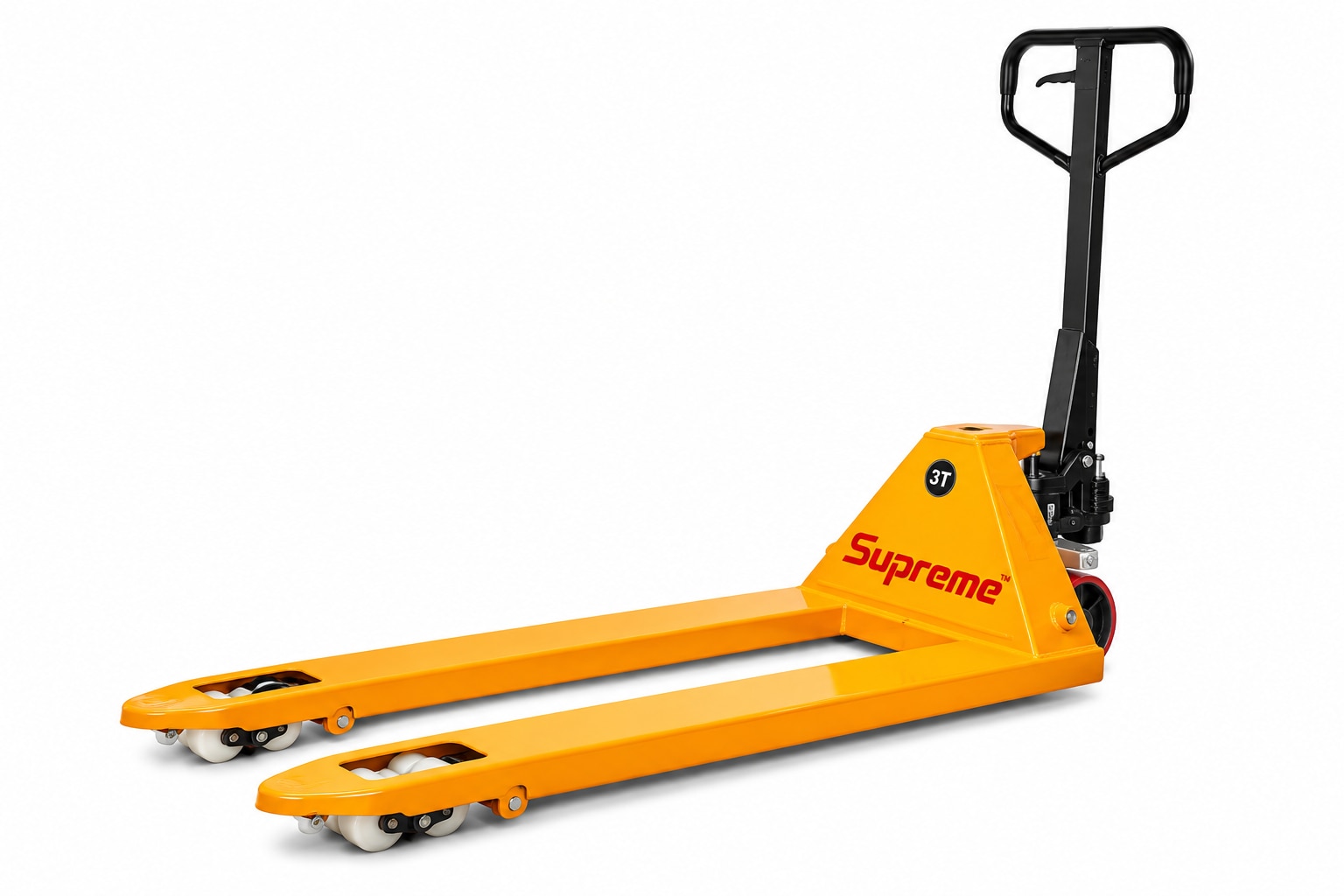 | Pallet Truck Heavy-Duty Material Handling Solution The Supreme Hand Pallet Truck is a robust and reliable material handling solution designed for the efficient... View product → |
Frequently asked questions
What should you inspect before using a hand pallet truck in Jaipur?
Park it on level ground and check the forks, wheels, handle, hydraulic lift, lowering control, frame, and steering. Test every control before loading; remove the truck from service if a check fails.
How do you position a hand pallet truck under a pallet?
Centre both forks under the pallet, insert them fully, and confirm the load is balanced and stable before lifting. Do not move a pallet with loose, damaged, or unevenly distributed goods.
How should you operate a hand pallet truck on warehouse floors?
Move at walking speed, keep the route clear, maintain visibility, and slow before stopping or turning. Watch for pedestrians, floor damage, wet areas, and uneven yard surfaces.
How do you use a hand pallet truck on ramps and dock plates?
Inspect the ramp or dock plate first, confirm its load rating and secure position, and keep the load stable. Approach thresholds and transitions slowly, never use an unsecured plate, and do not enter a blind corner without checking the route.
How can you acceptance-test a hand pallet truck for your site?
Test the truck unloaded and loaded on the floors, ramps, dock plates, thresholds, and turning areas where it will operate. Check steering, lifting, lowering, braking or stopping control, clearance, stability, and operator visibility before approving it.
Keywords