Packaging operators lose time and posture quality when cartons, containers and finished packs remain at floor level or sit below the sealing, labelling or filling point. By the end, you will be able to map a lift table to your line, check whether its dimensions and capacity fit your Jaipur factory, and decide when manual operation is practical rather than costly in labour and fatigue.
Key takeaways
- Set the platform near waist height to reduce repeated bending during packing.
- Match table capacity, platform size and lift range to your heaviest load.
- Choose manual lifting for short, controlled transfers with moderate throughput.
- Inspect wheels, brakes, hydraulic leaks and platform movement before each shift.
How a Manual Lift Table Improves the Packaging Workstation
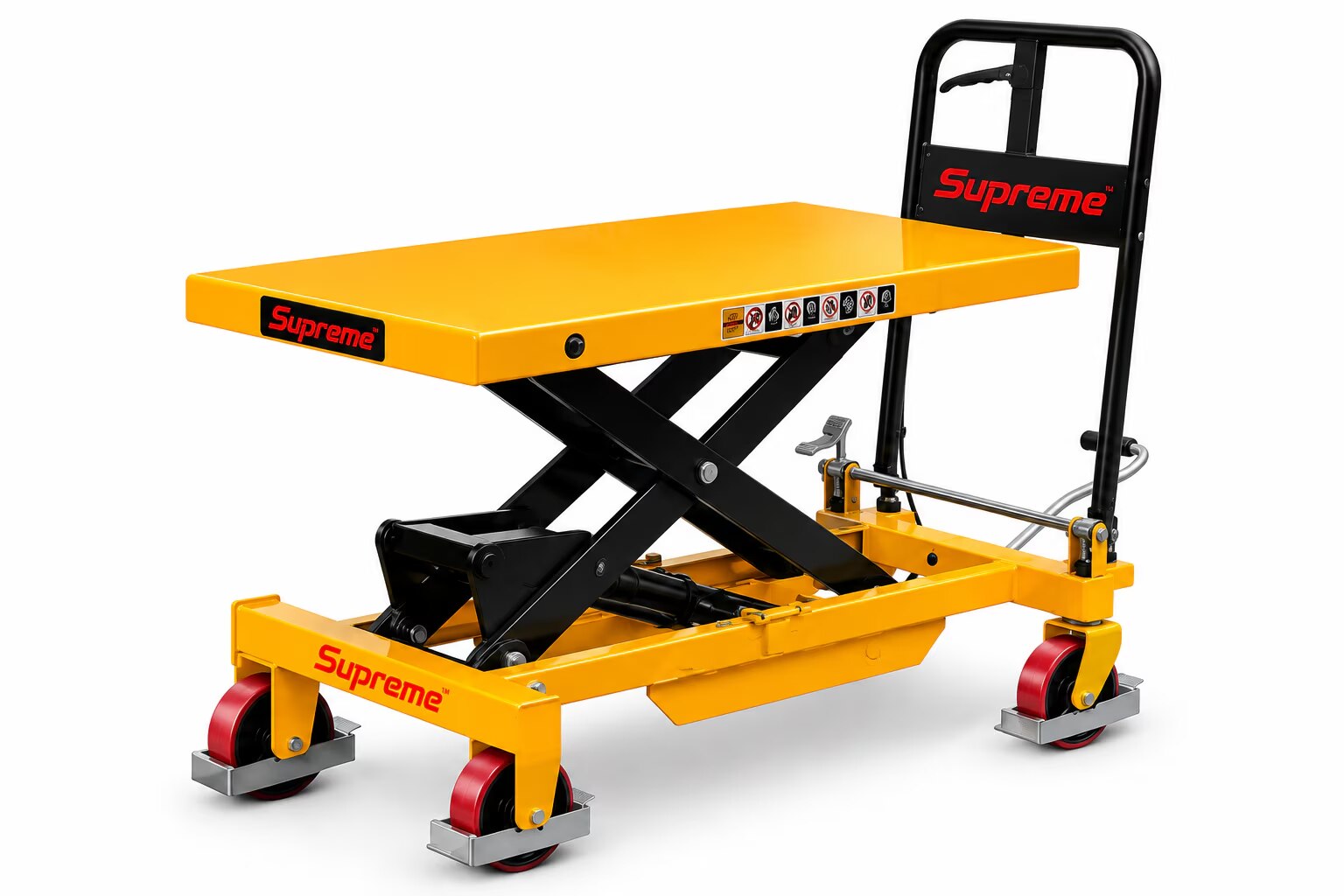
Raise cartons, cases or containers into a near-waist-height zone and the operator spends less time bending over the floor. A manual lift table for packaging work places materials beside a filling, sealing, labelling or packing station, making handoffs shorter and keeping the next pack within reach.
That improves working posture, but it does not remove lifting risk if heavy loads still have to be lifted from floor level onto the platform.
A manual lifting table for packaging line work helps by:
- Bringing incoming cartons or components to a consistent handoff height.
- Reducing repeated stooping while packing, closing cases or applying labels.
- Supporting smaller, more controlled transfers between a pallet, tote and workstation.
Do not describe the table as “reducing lifting to 23 kg.” The NIOSH Revised Lifting Equation starts with a 23 kg load constant, then reduces the recommended weight for the actual reach, height, twisting, frequency, duration and grip. Assess the complete task instead of treating that figure as a table rating or a safe limit.
Load position matters too. A mobile table needs a positive parking brake or equivalent immobilisation before loading, unloading or working beside the station; caster locks alone do not control every movement on a sloped floor or with an off-centre load.
If floor-level transfers happen repeatedly, a pallet positioner, roller conveyor, turntable or staged pallet height may reduce the lifting distance more effectively.
The Working Sequence: Load, Raise, Stabilise and Transfer
Position the table with its platform lowered, aligned to the filling, sealing, labelling or packing station. Keep the aisle clear, then engage the positive parking brake before loading; caster locks alone do not prevent every movement caused by a sloped floor or an off-centre load.
1. Load the cartons, cases, tote or pallet centrally. Include the product, packaging, pallet, tooling and attachments when checking the rated capacity. Do not treat the capacity rating as permission to place a heavy load at the platform edge.
2. Raise the platform using the foot pump or hand pump until the material reaches the operator’s working height or the conveyor handoff height. Keep hands and feet away from the scissor pack, perimeter gaps and underside, and stop if the load shifts or the table rocks.
3. Stabilise the position before handling the material. Confirm that the brake remains engaged, the platform is level, the load is supported across its usable area and no person stands beneath the raised platform. A guard or skirt does not replace these checks.
4. Transfer the material across the shortest safe gap into the station, without pulling the table sideways or using the load as a bridge. After the batch, remove the remaining load before lowering the platform fully and moving the table.
This sequence lets a manual lift table for packaging lines in Jaipur maintain a near-waist-height supply point without turning a height adjustment into an uncontrolled lifting or crush hazard.
How to Specify the Table for Your Jaipur Factory
Measure the packaging line and the complete load before choosing a lift table for factory packaging in Jaipur. The rated capacity must cover the product, carton, pallet or tote, tooling and any off-centre load; it is not permission to place that weight anywhere on the platform.
A manual lifting table for packaging line use also needs the correct lowered height for loading and raised height for filling, sealing, labelling or packing.
Record these figures at the installation point:
- Platform length and width, including the pallet, tote or conveyor transfer area.
- Lowered and raised platform heights, plus the conveyor or bench height.
- Table length, wheel footprint, aisle width, turning space and clearance beneath the platform.
- Total load mass and its centre of gravity; check the manufacturer’s load-position diagram.
- Pump strokes or crank turns per adjustment, time to reach working height, adjustments per shift and whether unloading is required before raising.
- Floor condition, dust, debris, heat exposure and drainage; specify protection against hydraulic-oil leakage and access to replacement seals, wheels and hydraulic parts.
| Check | Measure or ask for | Decision |
|---|---|---|
| Lowered height | Floor to platform top | Reject if loading still requires unsafe lifting |
| Raised height | Platform top to work surface | Confirm a level handoff |
| Platform size | Load footprint plus transfer clearance | Confirm no overhang or obstruction |
| Capacity | Complete load and off-centre position | Use the manufacturer’s rated position |
| Aisle space | Table footprint plus operator clearance | Confirm movement without trapping hands or feet |
When Manual Operation Beats—or Loses to—Other Equipment
A manual lift table for packaging work wins when loads need short-distance movement and repeated height adjustment, but not continuous pallet transport or high-level stacking. It needs no battery charging and suits intermittent work beside filling, sealing, labelling or packing stations.
| Equipment | Best use | Limitation |
|---|---|---|
| Manual lift table | Raising cartons, totes or tooling to a working height beside the line | Manual pumping and limited travel make it poor for constant repositioning |
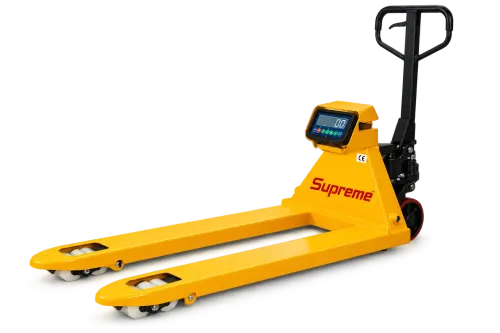
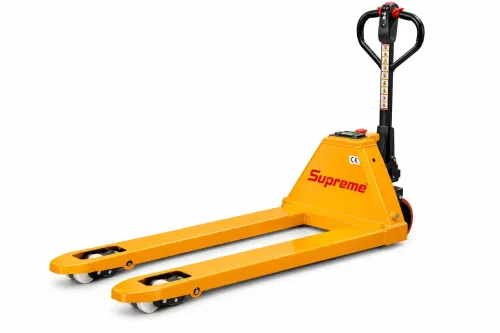
| Pallet truck | Moving loaded pallets across the floor | It provides little ergonomic height adjustment and does not present cartons at a stable packing height |
| Platform trolley | Carrying boxes, components or finished packs over short distances | Its fixed deck leaves operators bending unless the load is already at the right height |
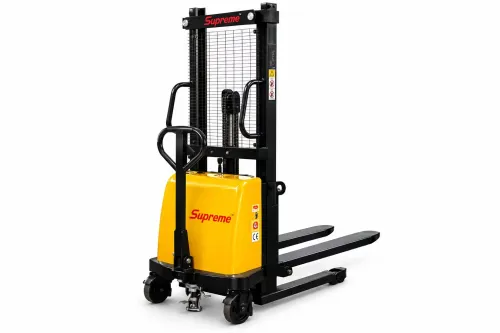
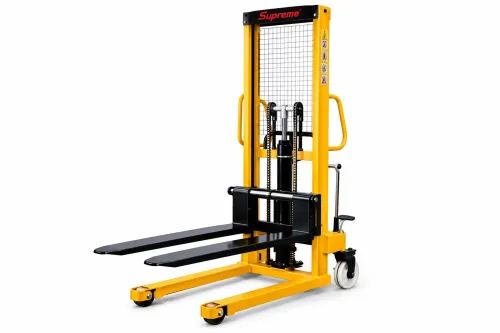
| Manual stacker | Lifting pallets for storage or placing loads at moderate heights | Pumping effort, slower travel and turning clearance work against fast line-side handling |
| Semi-electric stacker | Frequent lifting, longer travel and higher stacking | Battery charging, greater cost and more maintenance add little value for occasional low-level transfers |
Choose a manual lift table for factory packaging in Jaipur when the load is intermittent, the destination is nearby and the main gain is waist-height access. Reject it when operators repeatedly move heavy pallets, stack above safe reach, or transfer loads from floor level without mechanical assistance.
Compare the combined product, carton, pallet or tote, tooling and off-centre load against the rated capacity. A table that handles the weight but not the load distribution creates instability rather than productivity.
Safety, Maintenance and a Supplier Specification You Can Compare
Document the safety controls, service conditions and supplier data before comparing prices. A manual lift table for packaging lines in jaipur must address scissor crush zones, perimeter gaps, foot clearance and unintended descent. Select guards, skirts, warning labels and operating procedures from the risk assessment, not as decorative additions.
Use this comparison sheet for every quotation:
| Requirement | Record from supplier | Why it matters |
|---|---|---|
| Rated load | Combined product, carton, pallet or tote, tooling and off-centre load limits | Capacity is not safe for arbitrary load positions |
| Height and movement | Minimum and maximum platform heights, hydraulic stroke, travel time, pump strokes or crank turns | Shows whether operators can adjust height quickly |
| Stability and control | Wheel size, brake arrangement, fixed-base option, lowering control and descent behaviour | Prevents rolling or sudden lowering beside the line |
| Protection | Scissor guarding, platform stop, foot clearance and warning labels | Exposes unprotected shear and crush points |
| Service support | Inspection intervals, oil-leak checks, seals, wheels and hydraulic parts | Determines uptime in dusty Jaipur conditions |
For manual lift table for packaging work in jaipur, write dust ingress, floor debris, heat exposure, hydraulic-oil leakage and wheel wear into the maintenance requirement. Ask how parts arrive, who performs repairs and whether inspection instructions are supplied. Ask Supreme Material Handling Equipment to complete this same schedule; compare its answers with competing quotations.
Do not describe the table as “reducing lifting to 23 kg”. The NIOSH Revised Lifting Equation starts at 23 kg, then reduces the recommended weight for reach, height, twisting, frequency, duration and grip. Record adjustment frequency per shift and whether unloading is required before changing height.
Related product
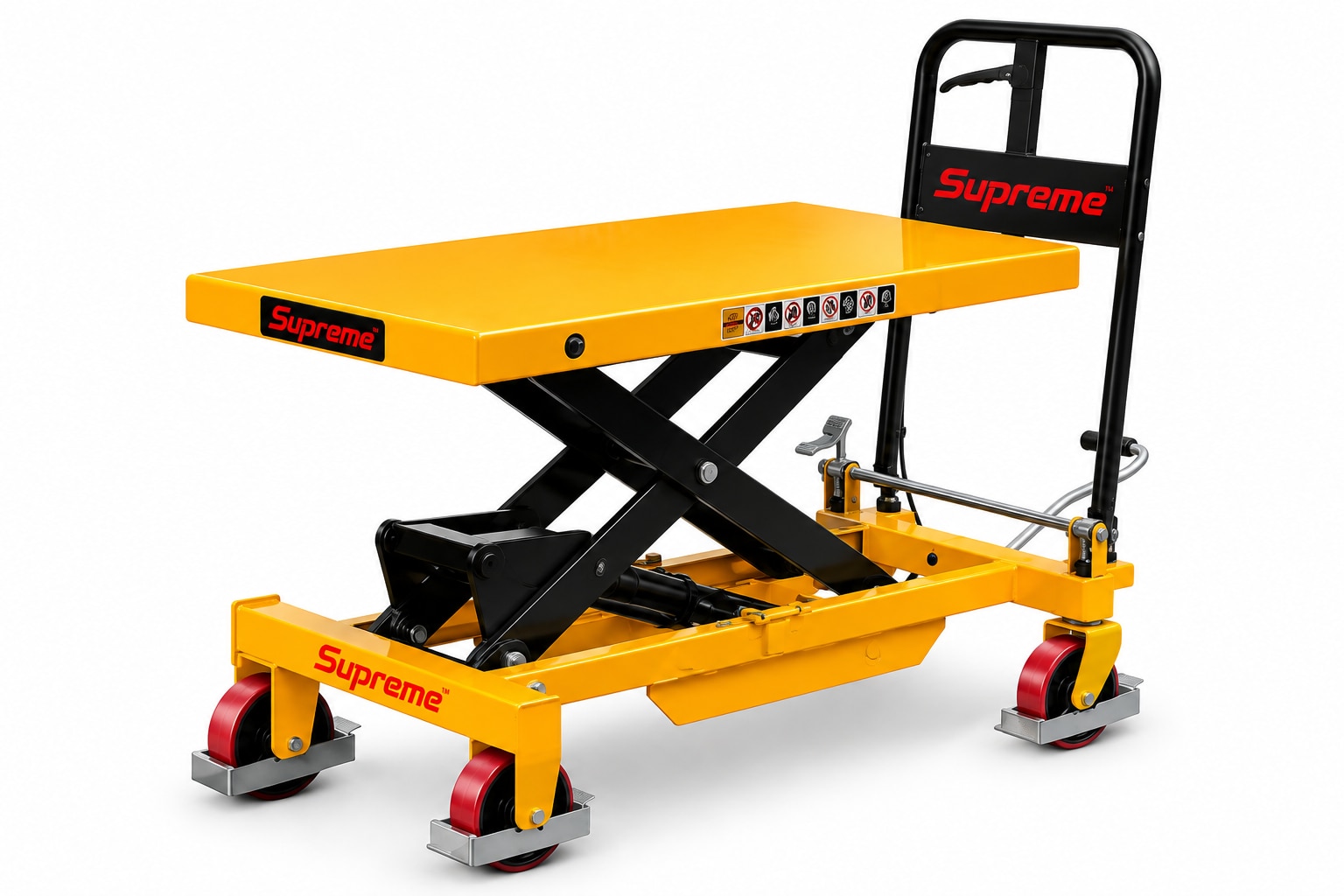 | Lift Table Supreme MHE The Supreme Manual Session Lift Table is a robust and practical material-handling solution designed for lifting, positioning, loading,... View product → |
Frequently asked questions
How does a manual lift table improve a packaging workstation?
It raises cartons, cases or containers into a near-waist-height zone, reducing floor-level bending and shortening handoffs to filling, sealing, labelling or packing stations.
What should you specify when buying a manual lift table for a Jaipur factory?
Specify maximum load, platform dimensions, lowest and highest platform heights, lift mechanism, wheel and brake type, aisle constraints and the size of the loads you handle.
When is manual operation better than powered lifting equipment?
Manual operation suits short transfers, moderate loads and workstations without frequent height changes. Choose powered equipment when loads are heavy, cycles are continuous or operators need repeated lifting throughout a shift.
What safety and maintenance checks does a manual lift table need?
Check the rated load, wheel brakes, platform stability, hydraulic leaks, handle and linkage condition, pinch points and smooth raising and lowering before use.
Keywords